PFAS and Biosolids: What we learned from Purdue’s Progress Farm PFAS Study
Beneficial reuse of biosolids as organic fertilizers offers important agronomic and economic benefits, but it can also introduce per- and polyfluoroalkyl substances (PFAS) into agricultural soils. Purdue University studies on Progress Farm evaluated PFAS retention in the vadose zone, the area between the earth’s surface and water table, of an agricultural site with a focus on the impact of soil properties and PFAS transport to groundwater and a through runoff event.
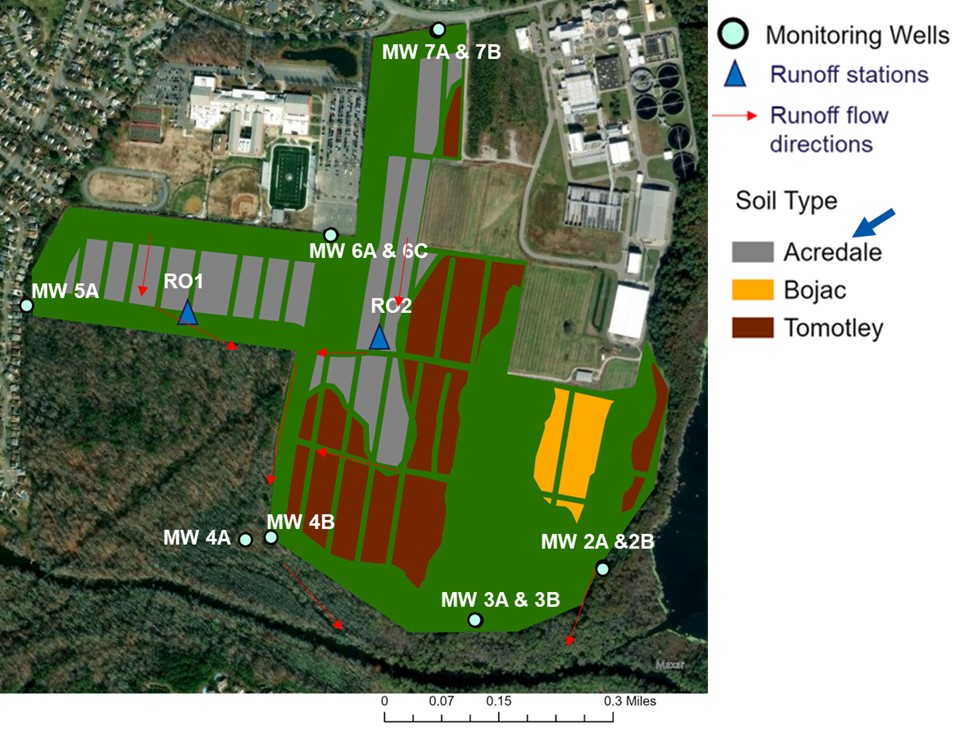
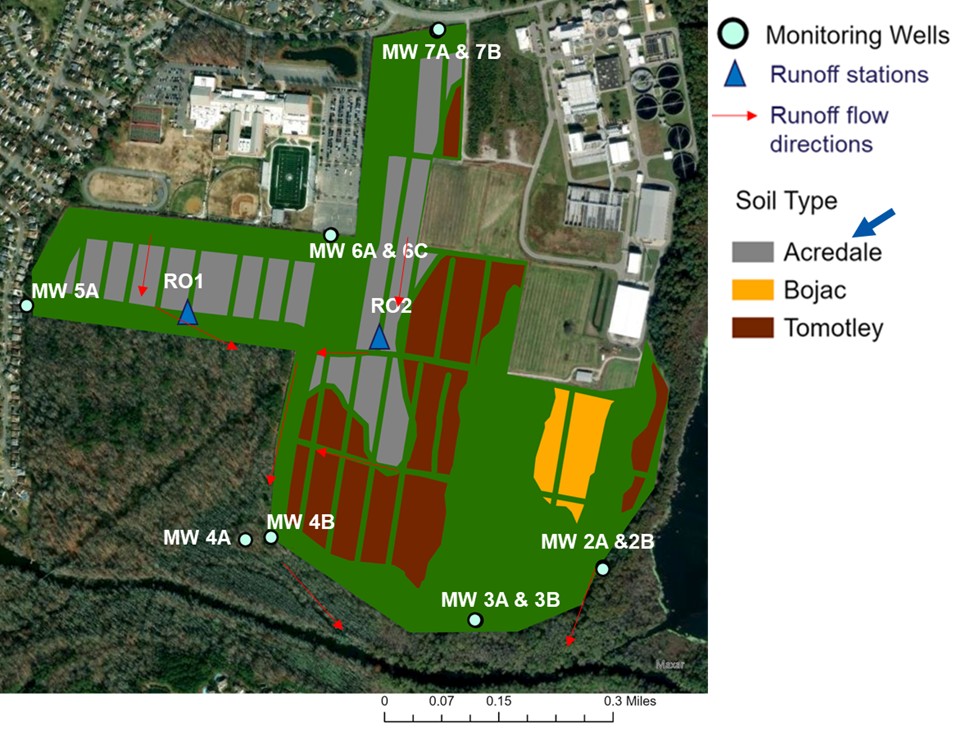
The Progress Farm in Virginia Beach, located at one of Hampton Roads Sanitation District’s facilities, has been used as a research facility for years. The fields investigated received Class B biosolids since 1986 with a 2017–2022 pause followed by Class A biosolids applied in 2023 across three soil types—from clay‑rich, slow‑draining silt loams to fast‑draining sandy loams. Analysis of 54 PFAS were done on soil cores (1-ft. increments up to 8 ft.) and runoff samples collected pre- and post-2023 biosolids application, as well as six groundwater monitoring wells with pairs of shallow and deep wells that were sampled quarterly. Class A biosolids are biosolids that are treated to undetectable pathogen levels. Class B has higher pathogen levels and generally has greater restrictions.
Why This MattersCommunities often reuse treated sewage solids (“biosolids”) as affordable fertilizers and soil amendments. Some biosolids contain PFAS (“forever chemicals”) because of municipal and industrial wastewater that comes to the plant for treatment. These PFAS can linger in soils and move with water.
What We StudiedAt the Progress Farm at Hampton Roads Sanitation District, fields have received Class B biosolids since 1986 with a 2017–2022 pause followed by Class A biosolids applied in 2023 across three soil types—from clay‑rich, slow‑draining silt loams to fast‑draining sandy loams. We sampled soils (to 2.4 m), rain, runoff, and six groundwater wells quarterly, testing for 54 PFAS.
Key Findings: Overall highlight from our Progress Farm research revealed minimal impact to groundwater from the long history of municipal biosolids application.
-PFAS persist in soils even after a significant pause; surface and subsurface soils were still dominated by long‑chain PFAS (notably PFOS).
-The new 2023 Class A application did not meaningfully change overall PFAS patterns in legacy fields.
-Soil matters: Clay‑ and silt‑rich soils held more PFAS; organic carbon helped retain long‑chain PFAS at depth. Sandy areas allowed deeper movement.
-Not all PFAS come from biosolids: We uncovered PFAS in rain and in nearby forest soils with no biosolids history; and recognize the need to consider other PFAS sources when evaluating PFAS fate from biosolids.
-Runoff transported PFAS loads off historically amended fields into the agricultural drainage ditch network.
-Groundwater impacts were generally low (most wells near/below parts‑per‑trillion levels and under EPA 2024 drinking‑water limits).
-There were two outlier findings. We uncovered high readings in two wells in sandy zones adjacent to a lake historically impacted by PFAS from military activities and a retired wastewater treatment plant.
Soybeans grown at the site had no long-chain bioaccumulating PFAS, thus not impacted by the PFAS presence from legacy-impacted biosolids.
Contributed by Linda Lee, Ph.D., Professor of Agronomy & EEE/Assistant Dean of Agricultural Research and Graduate Education at Purdue University; Jamie Heisig-Mitchell, HRSD Chief of Water Quality; and Chris Burbage, Ph.D., HRSD Environmental Scientist and VBC Research Committee Chair