Why Farmers Use Biosolids
Farmers use biosolids because they offer a cost‑effective, reliable source of nutrients, improve soil health, and help manage the rising and unpredictable costs of alternative fertilizers, all while increasing crop yields.
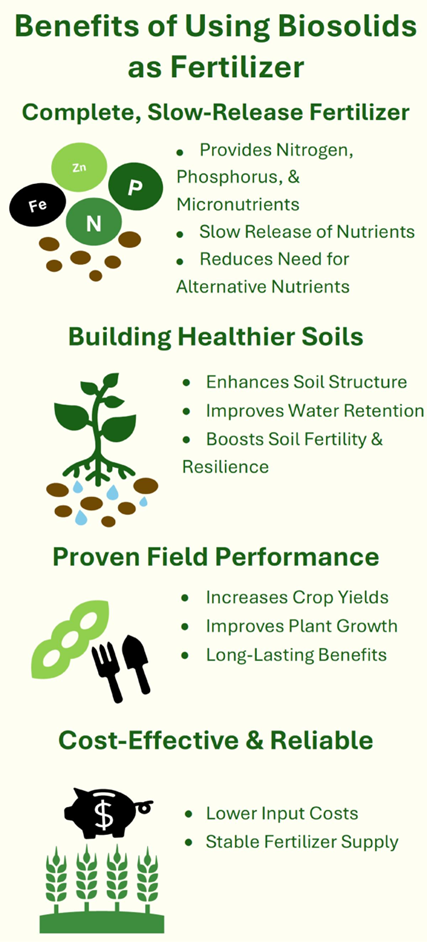
A Complete, Slow‑Release Fertilizer Biosolids provide a full range of essential plant nutrients, including nitrogen, phosphorus, sulfur, calcium, and magnesium, along with micronutrients such as iron, zinc, copper, and manganese that are often limited in commercial fertilizers. Much of the nitrogen in biosolids is in organic form and is released gradually as soil microbes break down the material. This slow‑release pattern feeds crops over multiple seasons, better matches plant uptake, and reduces nutrient losses to leaching and volatilization. As a result, biosolids can provide farmers an alternative source of nutrients at a lower overall cost.
Building Healthier, More Resilient Soils Because they are rich in organic matter, biosolids significantly improve soil quality. They enhance soil structure and porosity, increase water infiltration and water‑holding capacity, and support deeper, more extensive root systems. Biosolids also increase the soil’s cation exchange capacity, improving its ability to hold nutrients and buffer changes in pH. Over time, these improvements can reduce the need for purchased fertilizer, lime, and supplemental micronutrients, especially in sandy or alkaline soils, and can make fields more resilient to drought and other stresses.
Proven Field Performance Field studies on crops such as corn, wheat, soybeans, cotton, and forage grasses show that biosolids frequently match or exceed the performance of standard chemical fertilizer programs. Yields are often equal or higher, and plants typically demonstrate greater nutrient uptake. A single properly managed application can provide measurable nitrogen benefits for several years, improving the long‑term economics of fertilization. In addition, biosolids contain naturally occurring biostimulant compounds, including humic substances, hormone‑like compounds, amino acids, and vitamins, which can enhance root growth, influence plant hormone balance, and improve tolerance to stresses such as drought.
Dual‑Purpose Tool in Volatile Markets When applied at agronomic rates and in compliance with regulatory requirements, biosolids function as both a fertilizer and a soil conditioner. They supply essential nutrients while simultaneously improving soil structure, organic matter content, and biological activity. This dual role is especially valuable in a period of unpredictable fertilizer price increases driven by geopolitical tensions and supply chain disruptions. Biosolids offer a stable, lower‑cost alternative that helps farmers manage input costs, maintain yields, and keep production steady.
Summary Used responsibly, biosolids provide farmers with a practical, science‑based way to lower fertilizer costs, build healthier soils, maintain or increase yields, and reduce exposure to volatile global markets. For many operations, they serve as an effective and environmentally responsible alternative or complement to conventional fertilizers.
For additional information on the benefits of biosolids as fertilizer, please refer to the Fact Sheets below, prepared by Dr. Badzmierowski, Dr. Evanylo, and Dr. Chaganti of the Virginia Tech School of Plant and Environmental Sciences.
Nutrient Content, Value, and Management of Biosolids
Benefits of Organic Matter in Biosolids