vbc logo

VBC Code of Good Practice

All members of the VBC subscribe to a voluntary Code of Good Practice to provide guidance for recycling biosolids in Virginia. The guidelines seek to capture current best practices by biosolids generators, land application companies and compost manufacturers and encourage them to go beyond the regulations to build good relations with the communities they serve. […]

Read More…

Policy and Rulemaking

General Assembly Advances PFAS Legislation Executive Overview During the 2026 session, the Virginia General Assembly advanced a coordinated PFAS regulatory pathway. Virginia lawmakers adopted a monitor‑and‑manage framework that provides for testing, reporting, tiered restrictions, and long‑term management planning. The legislation reflects the universal and growing concern about PFAS while attempting to balance environmental protection, its use as […]

Read More…

Science Digest

PFAS and Biosolids: What we learned from Purdue’s Progress Farm PFAS Study Beneficial reuse of biosolids as organic fertilizers offers important agronomic and economic benefits, but it can also introduce per- and polyfluoroalkyl substances (PFAS) into agricultural soils. Purdue University studies on Progress Farm evaluated PFAS retention in the vadose zone, the area between the […]

Read More…

EVAREC Warsaw Study Update

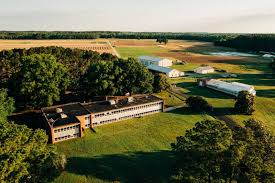
Things have been quiet at the VT-AREC site in Warsaw, VA.  The research team were last at the site this past Fall when soybean plant material for Dr. Ian Pepper’s research group was sampled. This sampling was done as part of the second phase of Dr. Pepper’s National Collaborative PFAS Project.  The objective of Phase 2 […]

Read More…

BIOSOLIDS 101

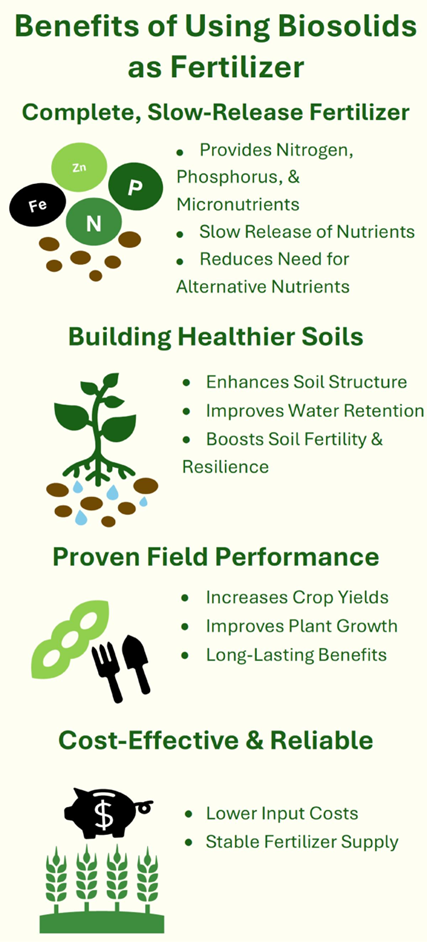
Why Farmers Use BiosolidsFarmers use biosolids because they offer a cost‑effective, reliable source of nutrients, improve soil health, and help manage the rising and unpredictable costs of alternative fertilizers, all while increasing crop yields. A Complete, Slow‑Release Fertilizer Biosolids provide a full range of essential plant nutrients, including nitrogen, phosphorus, sulfur, calcium, and magnesium, along […]

Read More…

Fate & Transport of PFAS from land applied biosolids

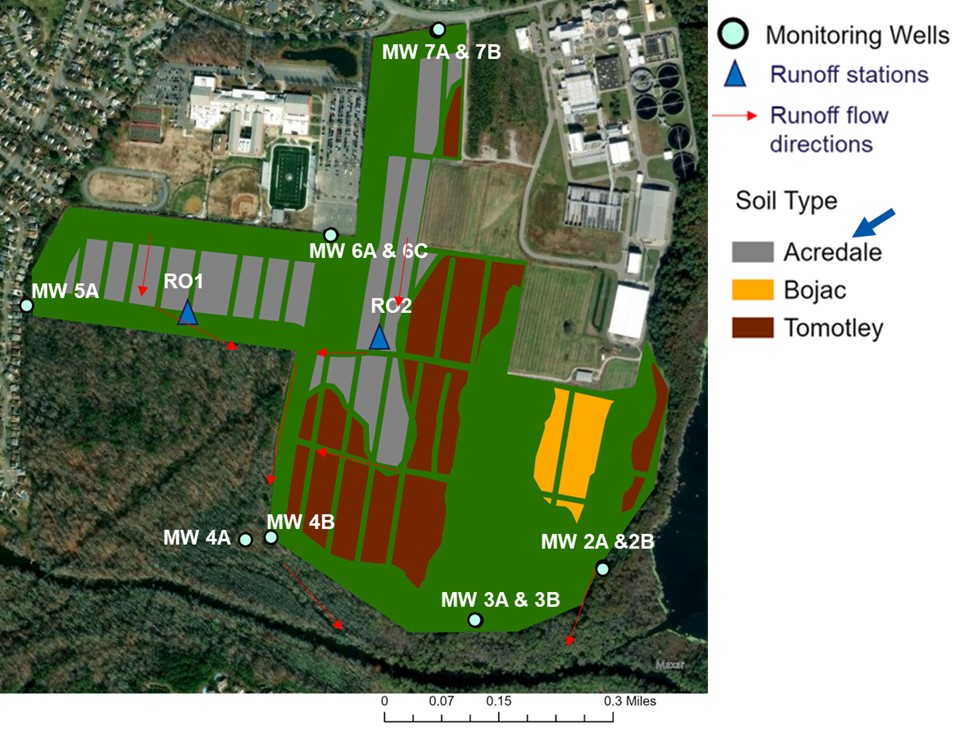
SVAREC Project Overview A comprehensive research project to evaluate the fate and transport of PFAS from land applied biosolids is underway at Virginia Tech University’s Shenandoah Valley Agricultural Research and Education Center (SVAREC) in Raphine, VA. A portion of the SVAREC farm has been permitted by VA DEQ for the purpose of conducting research of […]

Read More…

Highlights from Spring 2025 Unified Agenda: PFAS Rules on the Horizon

The U.S. Environmental Protection Agency (EPA) outlined several PFAS-related actions in its Spring 2025 Unified Regulatory Agenda (published September 4, 2025) that could affect how biosolids are managed and land-applied.  While not all changes are final, the direction points to increased scrutiny, more monitoring, and potentially tighter controls where PFAS are present.  Why This Matters […]

Read More…

EPA–VDACS MOU: What It Could Mean for Biosolids Land Application in Virginia

On September 30, 2025, the U.S. Environmental Protection Agency (EPA) and the Virginia Department of Agriculture and Consumer Services (VDACS) signed a Memorandum of Understanding (MOU) to strengthen cooperation on sustainable farming, regulatory compliance, and communication with Virginia’s agricultural community. The MOU does not change existing laws or regulations; it sets priorities and processes that […]

Read More…

Ag Expo Site Combines Innovation and Tradition

By Jeff Blakley, NRCS Virginia State Public Affairs Specialist LOCUST GROVE — The rolling fields of Brooke Farms will once again welcome farmers, industry leaders and community members on August 7 for the 2025 Virginia Ag Expo. It will be the second time the Chambers family has hosted the state’s largest agricultural field day. Brooke Farms, owned […]

Read More…

VBC Answers Your Questions

Biosolids are mostly organic solids resulting from the treatment of wastewater. They have undergone additional treatment to kill pathogens and stabilize the material for recycling. During treatment, bacteria and other tiny organisms break sewage down into simpler, harmless organic matter. The organic matter combined with bacterial cell masses settles out to form biosolids. This organic […]

Read More…